
News & Stories
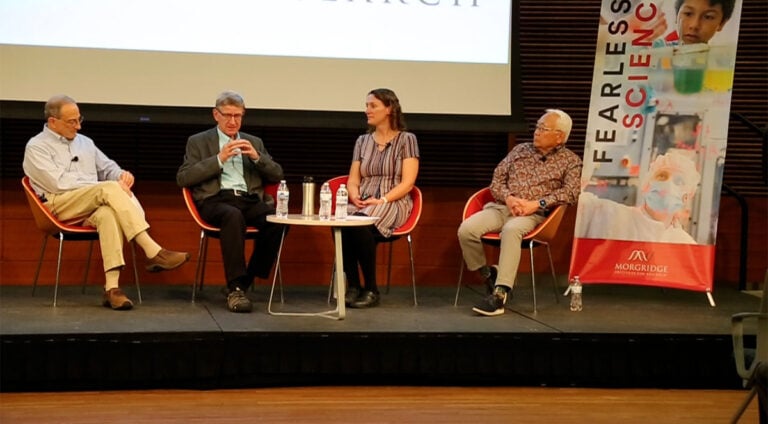
Discuss: What is scientific knowledge, anyway?
Morgridge’s latest Fearless Science Forum, held on Oct. 13, asked four scientific leaders how scientists know what they know.
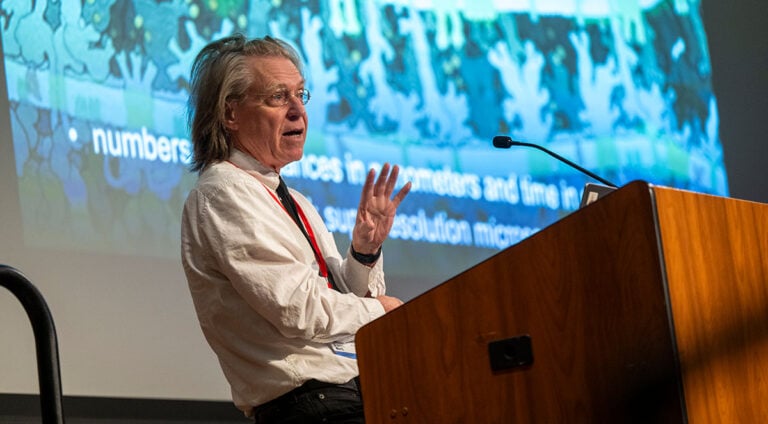
In focus: I2KxBINA Community Congress 2026
The 6th annual BINA Community Congress, held in conjunction with Images 2 Knowledge, (I2K), brought the multiscale imaging frontier to the Discovery Building from Sept 27-Oct 2.
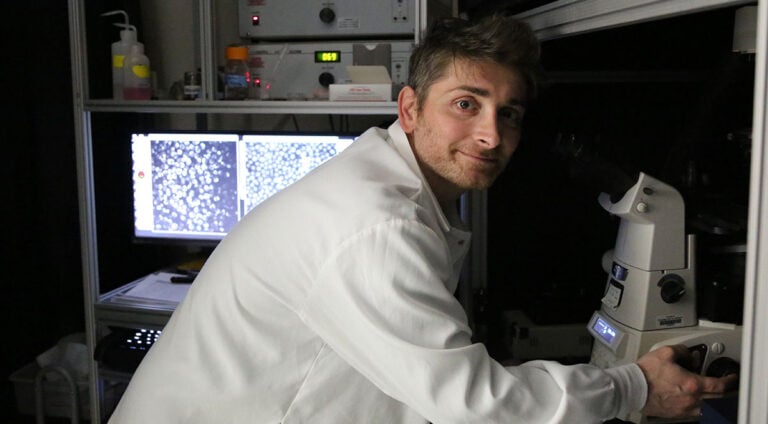
Rising Sparks: Christian Tentellino, biomedical imaging
Morgridge Postdoctoral Fellow Christian Tentellino’s academic journey brought him to Madison, Wis. to develop imaging tools aimed at revealing why solid tumors stymy immune cell treatments: “The hope of doing something relevant in the clinical field in the future is what moves me daily.”


